
AI-Powered Marketing
Digital Marketing Consultant
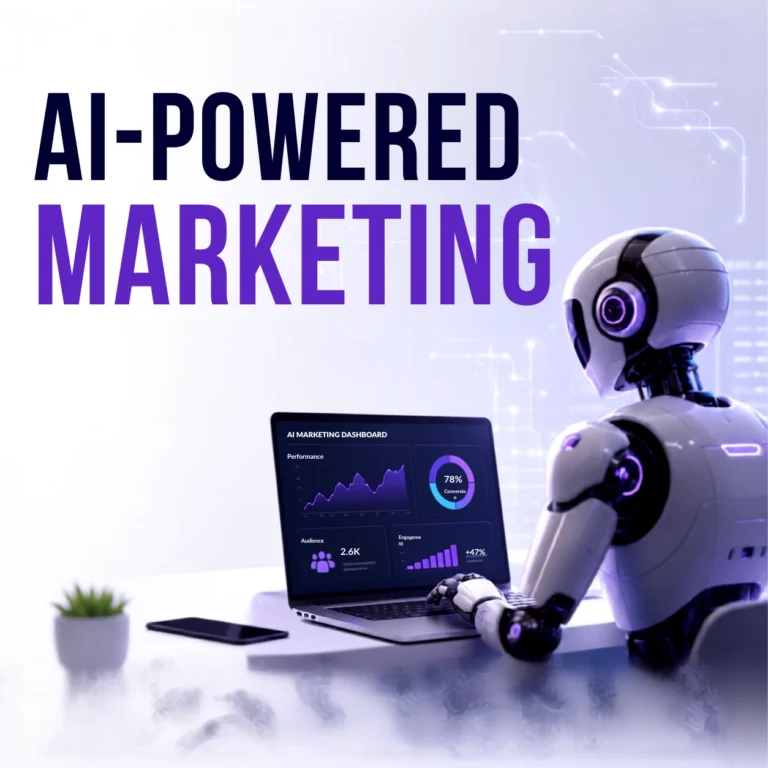
AI-Powered Marketing: A Data-Driven Revolution Transforming the Industry
As a Digital Marketing Consultant, I think Artificial Intelligence (AI) is no longer a futuristic concept but a present-day reality profoundly reshaping marketing strategies worldwide. The integration of AI into marketing — often called AI-powered marketing — is driving unprecedented efficiency, personalization, and insight-driven decision-making.
The Growing Adoption of AI in Marketing
- According to a 2023 Gartner report, 75% of marketers reported using AI technologies in some form.
- The global AI in marketing market size is expected to reach $107.5 billion by 2028, growing at a compound annual growth rate (CAGR) of 29.79% from 2021 to 2028 (Fortune Business Insights).
- Businesses implementing AI report an average increase in marketing ROI by 30% to 50% within the first year.
Key Areas Where AI Impacts Marketing
1. Personalization at Scale
- AI analyzes vast datasets from customer interactions to segment audiences into hyper-targeted groups.
- Salesforce’s State of Marketing Report 2023 reveals that 83% of customers are willing to share data for a more personalized experience.
- AI-driven personalization boosts conversion rates by 5x compared to generic campaigns (McKinsey).
2. Predictive Analytics
- AI uses historical data and machine learning to forecast customer behavior and market trends.
- Businesses using predictive analytics see a 20% increase in sales opportunities and 15% improvement in customer retention rates (Forrester).
- AI-powered forecasting reduces campaign costs by optimizing budget allocation based on predicted performance.
3. Automation and Efficiency
- AI automates repetitive tasks such as email marketing, social media posting, and ad bidding.
- Reports show AI automation can save marketers up to 40% of their time, allowing focus on strategy and creativity (HubSpot).
- Programmatic advertising powered by AI accounts for over 85% of digital display ad spending in the US (eMarketer).
4. Enhanced Customer Insights
- AI-driven sentiment analysis and natural language processing (NLP) enable brands to gauge customer emotions at scale.
- 72% of marketers use AI tools to analyze customer feedback and online conversations (Statista).
- These insights allow real-time optimization of messaging, tone, and campaign direction.
AI Marketing Tools Driving Results
- Popular AI tools such as ChatGPT, Jasper, and HubSpot’s AI features help marketers generate content, optimize SEO, and personalize communication.
- AI-powered chatbots improve customer support, leading to an average 30% increase in customer satisfaction (IBM).
- Dynamic pricing models driven by AI can increase revenue by up to 25% in competitive markets.
Challenges and Ethical Considerations
- Despite benefits, 23% of marketers cite data privacy concerns as a major barrier to AI adoption (PwC).
- Transparency in AI decision-making and bias mitigation remain critical to maintain consumer trust.
- Regulatory compliance (e.g., GDPR, CCPA) must be integrated into AI marketing strategies.
Looking Ahead: The Future of AI in Marketing
- AI is expected to become more integrated with augmented reality (AR), voice search, and video marketing.
- By 2025, 50% of all customer interactions are predicted to involve AI technologies (IDC).
- Marketers who embrace AI early will gain a competitive edge with more agile, data-driven, and customer-centric campaigns.
Why AI and Data Are the Perfect Pair in Marketing
At its core, AI thrives on data. Every click, swipe, purchase, and interaction generates valuable information. AI algorithms analyze this data at lightning speed, uncovering patterns and predicting customer behavior with unprecedented accuracy. This means marketers can tailor messages and offers not just broadly but at the individual level, creating experiences that truly resonate.
Imagine a campaign that adapts in real-time to your audience’s mood, preferences, and even the time of day. That’s not science fiction—it’s happening now. AI tools can optimize ad spend by targeting the right people at the right moment, improving conversion rates while reducing waste.
Conclusion
As a Digital Marketing Consultant, I think AI-powered marketing is not just a trend but a fundamental shift in how brands connect with consumers. Driven by data and advanced algorithms, AI enables deeper personalization, smarter decisions, and greater efficiency. As technology evolves, marketers must balance innovation with ethical and privacy considerations to build trustworthy, impactful relationships in the digital era.